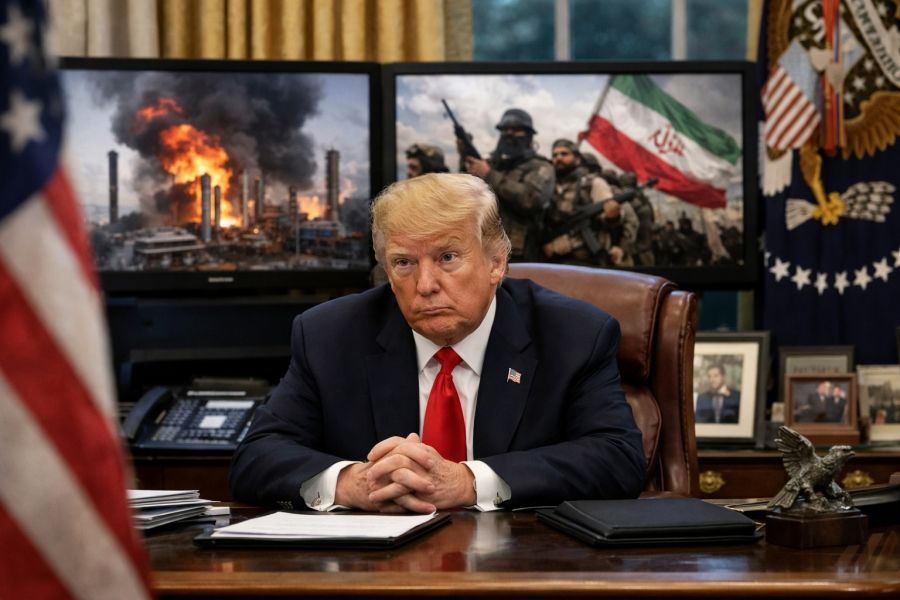
Cairo -- US President Donald Trump expressed growing frustration with America's allies on Tuesday, accusing them of failing to support Washington's military campaign against Iran, as the conflict drives global oil prices higher and strains the U.S. economy.
In a sharply worded social media post, Trump urged allies to "go get your own oil", criticising countries such as France, the United Kingdom, Spain, and Italy for refusing to deepen their involvement in a war that has now entered a critical phase with no clear end in sight.
The remarks came as U.S. gasoline prices climbed above $4 per gallon for the first time since 2022, reflecting the global shock triggered by Iran's closure of the Strait of Hormuz--a strategic chokepoint through which roughly one-fifth of the world's oil passes under normal conditions.
Intensifying Conflict and Strategic Miscalculations
The war, which began on February 28 with direct U.S. strikes on Iranian targets, has escalated significantly over the past month. Initial expectations in Washington that limited strikes and targeted assassinations would yield a quick strategic advantage have proven overly optimistic.
Instead, Iran has mounted a coordinated response, launching precision missile attacks on U.S. and Israeli bases across the region and targeting energy infrastructure. The conflict, involving both the United States and Israel, has already claimed more than 3,000 lives and disrupted global energy markets.
Recent U.S. strikes on a city housing a major Iranian nuclear facility underscored the war's intensity, with dramatic explosions signaling a further escalation.
Allies Withhold Support
Despite Washington's expectations, key European allies have resisted deeper involvement.
France permitted limited use of its Istres air base but only under strict conditions that it would not support combat operations. Spain has closed its airspace to U.S. military flights linked to the conflict, while Italy reportedly denied access to the Sigonella base for certain operations, though it maintains broader cooperation with Washington.
These refusals have exposed fractures within Western alliances and added to the administration's frustration.
Oil Shock and Economic Fallout
The closure of the Strait of Hormuz has sent shockwaves through global markets. Brent crude prices have surged to around $107 per barrel--up more than 45% since the war began.
In the United States, the economic consequences are becoming increasingly visible. Rising fuel costs are pushing up transportation and logistics expenses, contributing to broader inflationary pressures.
Diesel prices have jumped to an average of $5.45 per gallon, sharply increasing costs for freight, agriculture, and supply chains. Analysts warn that consumers will feel the impact not only at the pump but also in grocery bills and delivery costs.
"Americans are spending hundreds of millions of dollars more on gasoline every day," said Patrick De Haan of GasBuddy, noting the psychological and economic strain on households.
A recent AP-NORC poll found that 45% of Americans are highly concerned about their ability to afford fuel in the coming months, highlighting the political risks for the administration in an election year.
Iran's Strategic Shift
On the battlefield, Iran has demonstrated resilience and adaptability. Following the assassination of several senior commanders, a new generation of leadership has emerged, reshaping the country's military strategy.
Tehran's decision to close the Strait of Hormuz has proven particularly consequential, amplifying its leverage on the global stage. Domestically, the Iranian government has consolidated support, projecting unity and stability despite sustained attacks.
Internationally, Iran has paired military resistance with diplomatic signalling, presenting its approach as both strategic and rational.
A War Without Clear Victory
As the conflict drags on, the prospect of a decisive victory for either side appears increasingly remote. Analysts suggest that the United States and Israel have not only failed to secure a clear strategic win but have also lost the ability to convincingly claim one.
The psychological momentum, once expected to favour Washington, has instead shifted toward Tehran.
Meanwhile, the United Nations Human Rights Council has condemned recent U.S.-Israeli strikes, adding diplomatic pressure to an already complex situation.
Trump's Core Dilemma
For President Trump, the challenge now is no longer how to win the war--but how to end it.
Having initiated a conflict that has escalated beyond initial expectations, the administration faces a narrowing set of options. Prolonging the war risks further economic damage and political backlash at home, while a rapid withdrawal could be perceived as a strategic defeat.
The central question confronting the White House is how to engineer an exit that avoids the appearance of failure--at a time when both the military and economic costs of the conflict continue to mount.
Conversations
The opinions expressed in reader contributions are those of the respective author only, and do not reflect the opinions/views of Trans Asia News.