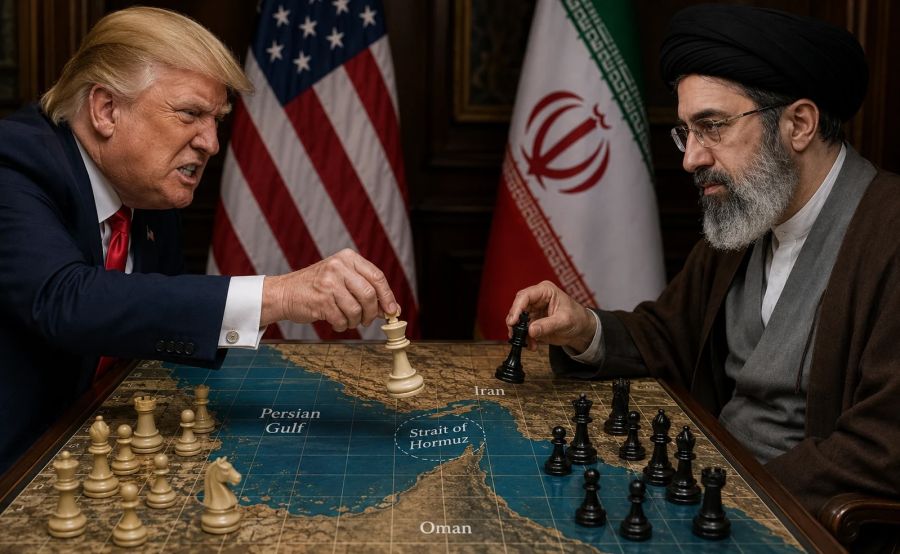
Dubai -- A newly reached memorandum of understanding (MoU) between the United States and Iran is facing mounting scrutiny in Washington and sparking debate in Israel, as prominent analysts argue the agreement reflects a recognition by President Donald Trump that military pressure failed to break Iran and its regional allies.
Rami G. Khouri, a Distinguished Public Policy Fellow at the American University of Beirut, said Trump now understands that the United States and Israel "have never faced anything like" the resistance mounted by Iran, Hezbollah and Yemen's Houthis, prompting a shift toward diplomacy after months of conflict.
US Lawmakers Demand Full Disclosure
Top Democratic lawmakers on three House committees have requested an immediate briefing and the full text of the MoU, saying Congress and the American public have been kept in the dark about a conflict they described as a "war of choice".
In a letter to Secretary of State Marco Rubio, Representatives Gregory Meeks, Jim Himes and Adam Smith called on the administration to provide the agreement, any side arrangements, and details of its strategy for implementing future understandings with Tehran.
The legislators said the administration had left Congress and the American people in the dark for more than 15 weeks about a "war of choice" that has proved to be a "strategic failure".
The lawmakers said the conflict had resulted in the deaths of 14 U.S. service members, injuries to hundreds more, damage to military assets and depleted munitions stockpiles. They also pointed to rising food and energy prices linked to the closure of the Strait of Hormuz.
"While we welcome the Administration's turn toward diplomacy and its decision to end this war of choice, the Administration must provide Congress with greater details about the MoU," the letter said.
Khouri: Trump Seeking Strategic Exit
Speaking to Al Jazeera, Khouri argued that Trump's recent actions suggest a more pragmatic approach despite earlier threats of renewed military strikes against Iran.
He said the U.S. president was taking steps that are "more conciliatory, more rational, more strategic, more legal-based" because he recognises Iran's resilience and capabilities.
According to Khouri, Trump was initially drawn into the conflict by what he described as the "excessive militaristic zeal" of Zionists and Israelis but has since concluded that continued escalation would be counterproductive.
"I believe that the US ultimately will triumph in this and Israel will be contained in some way," Khouri said, while cautioning that such a shift would take time.
Questions Over Israel's War Objectives
In Israel, analysts say the agreement is likely to intensify debate over Prime Minister Benjamin Netanyahu's handling of the conflict as the country moves toward another election cycle.
Yossi Mekelberg, a senior consulting fellow at Chatham House, said Washington would ultimately determine Israel's role in future negotiations with Tehran.
"The result was decided without Israel being involved in the negotiation and the memorandum of understanding," Mekelberg said. "In the 60 days of negotiation ahead, we have no idea how much Israel will be involved. Basically, it will be dictated to it by the Trump administration."
Mekelberg said many Israelis would now assess what the country achieved after more than two years of war across multiple fronts.
"The mood in Israel is that this was a failure," he said, arguing that none of Netanyahu's key objectives -- including regime change in Iran, dismantling Tehran's nuclear programme, curbing support for allied armed groups and weakening Iran's missile capabilities -- had been fully achieved.
Diplomacy Takes Centre Stage
The emerging MoU marks a significant shift from military confrontation to diplomacy, but key questions remain over its implementation and long-term impact on regional security.
With Congress demanding greater transparency and Israeli analysts questioning the outcome of the conflict, the agreement is likely to remain at the centre of political debate in both Washington and Jerusalem as negotiations move into their next phase.
Conversations
The opinions expressed in reader contributions are those of the respective author only, and do not reflect the opinions/views of Trans Asia News.