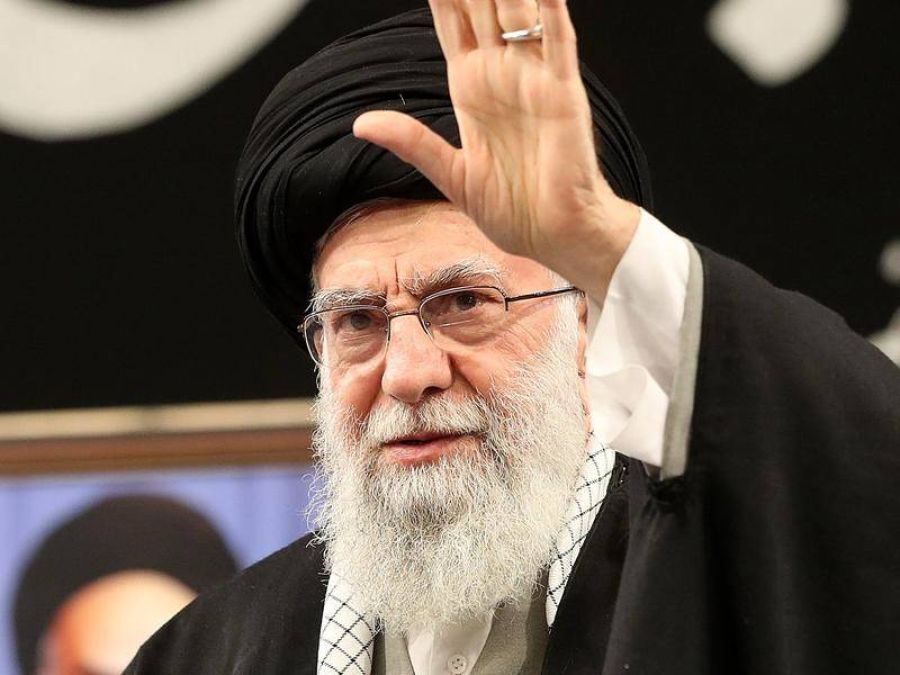
Tehran - Iran has announced a series of farewell, funeral and burial ceremonies for Ayatollah Seyyed Ali Khamenei, more than four months after the country's supreme leader was assassinated in an Israeli airstrike during the opening phase of the US-Israeli military campaign against the Islamic Republic.
The office responsible for preserving and publishing the works of the late leader said ceremonies would be held in Tehran, Qom and Mashhad over six days, culminating in his burial at the shrine of Imam Reza, one of Islam's holiest sites in the Iranian province of Khorasan.
Seyyed Ali Hossaini Khamenei was assassinated on February 28 in Tehran. Iranian authorities confirmed his death on March 1.
Eighty-six-year-old leader was killed along with four members of his family, including his wife, daughter and granddaughter. His son Mojtaba was injured while his wife also died in the attack. He was later elected as the new supreme leader, though he has yet to appear in public.
Satellite imagery published after the attack showed extensive damage to Khamenei's residence-cum-office complex known as Baite-Rehbari in the Israeli bombing.
Four-Month Delay
Iranian authorities have not publicly provided a detailed explanation for the more than four-month gap between the leader's assassination and the planned burial ceremonies.
However, officials have cited wartime conditions, extensive security considerations, consultations with religious authorities and preparations for nationwide mourning events as factors behind the delay.
The funeral ceremonies are expected to be among the largest public gatherings in the Islamic Republic's history, drawing millions of mourners from across Iran and abroad.
Beyond the religious aspects, funerals of senior Iranian leaders have historically served as major political events.
Iran previously turned the funeral of iconic Revolutionary Guards commander Qassem Soleimani into a multi-day national mobilisation effort. Soleimani's funeral procession travelled through multiple cities in Iraq and Iran before his burial in Kerman, with state media portraying the event as a display of national unity and support for the Islamic republic.
Multi-City Farewell
According to the statement, public farewell ceremonies for the late leader's body will be held at Tehran's Imam Khomeini Mosalla on July 4 and 5, corresponding to the 19th and 20th days of the Islamic month of Muharram.
A funeral procession through the Iranian capital is scheduled for July 6, followed by a second procession in the holy city of Qom on July 7.
The final funeral ceremony will take place in the northeastern city of Mashhad on July 9, coinciding with the eve of the martyrdom anniversary of Imam Zainal Abideen, the fourth Imam revered by Shia Muslims.
Ayatollah Khamenei will be buried at the shrine of Imam Reza, the eighth Shia Imam, a major pilgrimage site that attracts millions of visitors annually.
Call For Mass Participation
The organisers called on "all noble and dear people, the free people of the world, followers of the school of Islam, and those interested in Iran" to participate in the ceremonies and pay their final respects.
The statement thanked government institutions, religious organisations and volunteer groups for assisting with preparations but stressed that the ceremonies would belong primarily to the public.
"The principal role in organising these ceremonies belongs to the people themselves, who are the true owners of this mourning," the statement said.
Authorities expect millions of people to attend the events across Tehran, Qom and Mashhad, with state agencies coordinating transportation, accommodation, crowd management and security arrangements.
The funeral ceremonies are also expected to attract senior Iranian political, military and religious leaders, as well as foreign delegations and supporters of Iran from across the region.
Officials described the ceremonies as a final national tribute to a leader who dominated Iran's political and religious landscape for decades and whose assassination marked one of the most consequential moments in the country's modern history.
Conversations
The opinions expressed in reader contributions are those of the respective author only, and do not reflect the opinions/views of Trans Asia News.