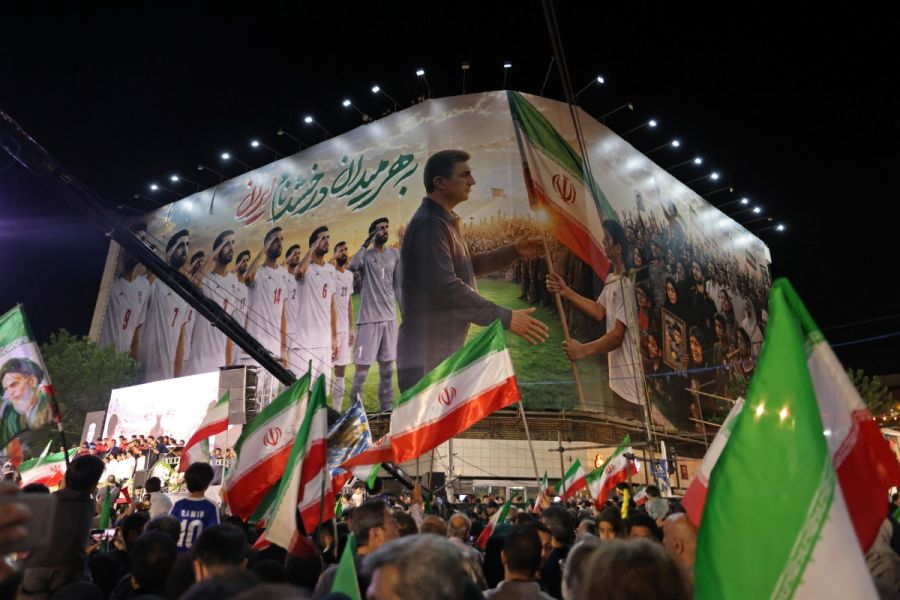
 - When Iran takes the field against New Zealand in Los Angeles on June 15, Team Melli will carry far more than the hopes of a football-crazy nation.
They will carry the weight of a country at war, a disrupted preparation programme, unprecedented security concerns and the expectations of millions of Iranians at home and abroad who have rallied behind the team amid one of the most turbulent periods in the country's modern history.
Iran was among the first Asian nations to qualify for the 2026 FIFA World Cup, but the months leading up to the tournament have been overshadowed by war imposed on Iran by the United States and Israel. At one stage, questions were raised over whether Team Melli would even participate in the competition, with all three of their group-stage matches scheduled to be played in the United States.
A Team Preparing Amid War
Unlike most World Cup contenders, Iran's preparations have been shaped by circumstances far beyond football.
The domestic Persian Gulf Pro League was suspended during the conflict, depriving many players of regular competitive action and disrupting training schedules. With the majority of the squad based in Iran, coach Amir Ghalenoei has had limited opportunities to work with his players under normal conditions.
Reuters recently reported that Iran's ageing squad has struggled to maintain match fitness amid the disruption, with veterans such as Mehdi Taremi, Ehsan Hajsafi and Shoja Khalilzadeh likely heading into their final World Cup campaign.
The uncertainty extended beyond the pitch.
For months, Iranian officials were unsure whether players and staff would be granted entry visas to the United States. Several senior federation officials, including key administrators, reportedly remain without visas even after players and most coaches received clearance.
Forced Into Exile
Originally, Iran intended to establish its World Cup base in Arizona.
Instead, amid visa complications and security concerns, the team relocated to Tijuana in Mexico, from where it will travel into the United States for matches against New Zealand, Belgium and Egypt.
The arrangement is far from ideal.
Iranian officials have complained that players may be forced to enter the United States only shortly before matches and return to Mexico immediately afterwards, depriving the team of normal training routines, media activities and recovery periods.
The squad travelled first to Turkey for a training camp before heading to Mexico, with support staff continuing to navigate visa hurdles.
Security Fears Follow Team Melli
Beyond logistics lies a more serious concern -- safety.
The war has transformed what would normally be a sporting event into a highly sensitive security operation.
U.S. President Donald Trump previously suggested that Iran's participation could pose safety challenges and at one point questioned whether it was appropriate for the team to travel to the United States. FIFA has repeatedly insisted that Iran would participate and that arrangements would be made to ensure the safety of players, officials and supporters.
Iranian officials have demanded guarantees covering visas, security, treatment of the national flag and anthem, and protection for players and staff.
Security analysts expect Team Melli matches to be among the most heavily policed fixtures of the tournament, particularly in Los Angeles, home to one of the world's largest Iranian diaspora communities.
Diaspora Divided, Yet United by Football
Iran's diaspora remains politically divided over the country's political system and the ongoing war.
West-backed monarchists have held protests in cities such as Los Angeles, Toronto and Munich before and after the outbreak of war.
Yet football appears to have created rare common ground.
Across social media, many Iranians with sharply different political views have rallied behind Team Melli, separating support for the players from broader political disputes. Football analysts say the national team has become one of the few institutions capable of uniting Iranians inside and outside the country.
In Los Angeles, where Iran is due to open their campaign, expatriate communities are already preparing to turn matches into displays of national solidarity.
War Galvanises Support
Far from weakening support for the team, the conflict appears to have strengthened it.
The squad received an emotional public send-off in Turkey before departing for North America, with many supporters describing the players as representatives of national resilience during a period of uncertainty.
Players have largely avoided political statements, focusing instead on football. But for many fans, simply appearing at the World Cup has become symbolic.
Iran have never advanced beyond the group stage in six previous World Cup appearances. Yet expectations are unusually high heading into matches against New Zealand, Belgium and Egypt. The tournament's expanded format offers a realistic chance of reaching the knockout rounds for the first time.
More Than Football
For Amir Ghalenoei and his players, the challenge is enormous.
They must overcome disrupted preparations, long-distance travel, visa complications, heightened security and the emotional burden of representing a nation living through conflict.
But if Team Melli can navigate those obstacles and make history in North America, their achievement could resonate far beyond football.
In a World Cup filled with superstars and title contenders, no team arrives carrying a heavier story than Iran.
Conversations
The opinions expressed in reader contributions are those of the respective author only, and do not reflect the opinions/views of Trans Asia News.