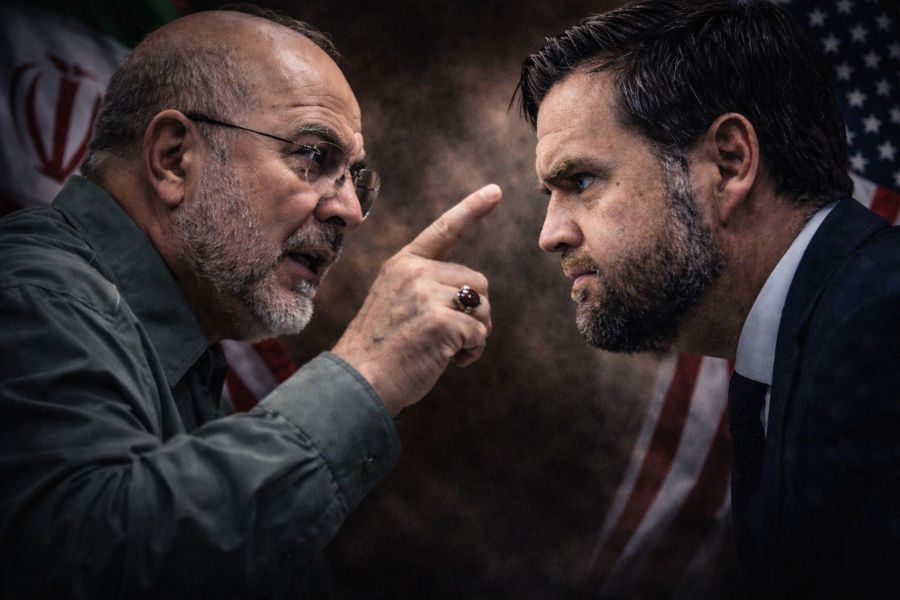
Tehran - Iran has issued one of its most combative statements in recent months following the collapse of high-stakes negotiations with the United States in Islamabad, raising fears that diplomacy may be giving way once again to confrontation.
After more than 21 hours of talks in the Pakistani capital, Iranian officials accused Washington of acting in bad faith and attempting to impose terms that Tehran says would have compromised its sovereignty. The breakdown came despite what both sides had initially described as a critical opportunity to bring an end to escalating tensions following weeks of conflict.
In a sharply worded statement, the Islamic Revolutionary Guard Corps (IRGC) described the United States as "perfidious, evil, and deceitful," alleging that Washington sought to achieve diplomatically what it had failed to secure militarily. The statement declared that Iran would continue what it called the "sacred defense" of its homeland "by all available means, whether military or diplomatic."
The unusually blunt language appeared to underscore the growing influence of Iran's military establishment over its political direction. Analysts noted that the tone suggested the IRGC had little expectation--if any--of reaching an agreement, raising questions about whether the negotiations were ever likely to succeed.
Pre-written defiance
Perhaps most striking was the timing of the statement. Iranian officials indicated it had been prepared before the negotiations even began, reinforcing the perception that Tehran entered the talks deeply sceptical of US intentions.
According to Iranian accounts, Washington demanded that Iran relinquish its stockpile of enriched uranium and cede control over the strategically vital Strait of Hormuz--conditions Tehran swiftly rejected as unacceptable.
While US officials have not publicly confirmed these specific demands, the Iranian narrative has gained traction domestically, where distrust of American intentions remains deeply entrenched.
Qalibaf: trust remains elusive
Iran's lead negotiator and parliament speaker, Mohammad-Baqer Qalibaf, struck a more measured but equally firm tone in remarks following the talks. Writing on social media, he said Iran had entered the negotiations in good faith but could not overlook what he described as a pattern of betrayal.
"My colleagues raised forward-looking initiatives," he said, "but the opposite side ultimately failed to win the trust of the Iranian delegation in this round of negotiations."
Qalibaf pointed to what he called the legacy of "two US-Israeli imposed wars" as a central reason for Tehran's reluctance to compromise, suggesting that recent hostilities have only deepened Iran's suspicion of diplomatic overtures.
He added that Iran would continue to pursue "powerful diplomacy alongside military fight," signalling that Tehran sees negotiations and force not as alternatives, but as parallel tracks.
Theatre and symbolism
The atmosphere inside the talks venue reportedly reflected the gravity, and symbolism of the moment. Qalibaf arrived carrying photographs of children killed in Manab, an apparent reference to recent civilian casualties that Iranian officials have repeatedly cited as evidence of aggression.
The IRGC delegation, meanwhile, arrived separately from civilian negotiators, a detail observers interpreted as a sign of internal divisions--or at least parallel chains of authority--within Iran's leadership.
A total of 86 officials participated in the talks, underscoring both the complexity of the issues at stake and the high political stakes for all parties involved.
Pakistan's diplomatic role
Despite the collapse, Iran expressed appreciation for Pakistan's role in hosting and facilitating the talks. Qalibaf described Islamabad as a "friendly and brotherly country," highlighting its efforts to create space for dialogue between two long-standing adversaries.
Pakistan has increasingly positioned itself as a regional mediator, though the failure of these talks underscores the limits of third-party diplomacy when core strategic disagreements remain unresolved.
A narrowing path forward
The breakdown in Islamabad leaves the future of US-Iran relations deeply uncertain. While neither side has formally withdrawn from diplomacy, the rhetoric emerging from Tehran suggests a hardening position that could make further negotiations even more difficult.
For now, Iran's leadership appears united around a central message: any agreement must reflect not only its strategic interests but also what it sees as the costs it has already endured.
As Qalibaf put it, the question facing Washington is no longer simply what it demands--but whether it can "earn Iran's trust."
Whether that trust can be rebuilt, however, remains an open--and increasingly urgent--question.
Conversations
The opinions expressed in reader contributions are those of the respective author only, and do not reflect the opinions/views of Trans Asia News.