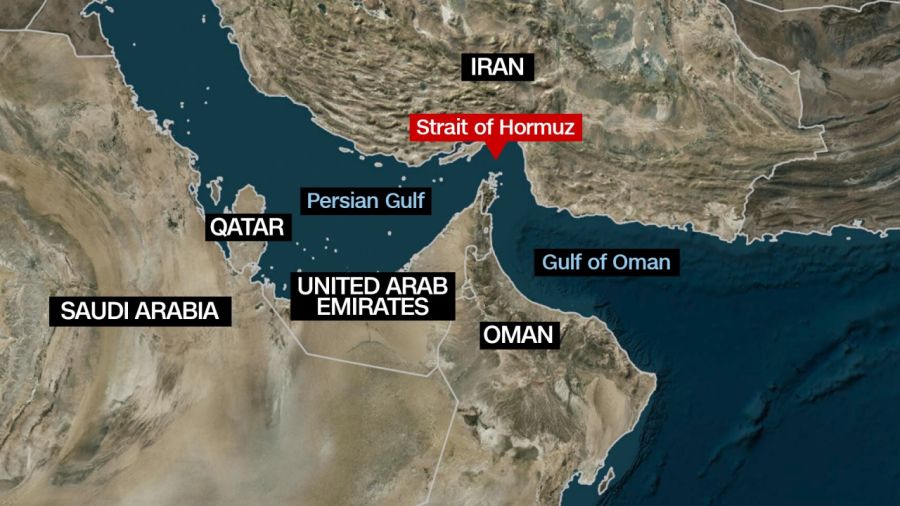
Tehran - The fragile ceasefire in the West Asia conflict came under renewed strain despite signs of diplomatic movement, as Iran formally responded to a US proposal aimed at ending hostilities while fresh security incidents rattled the Gulf region.
Iran's official news agency, IRNA, reported on Sunday that Tehran submitted its response to the US proposal via Pakistan, which has been mediating between the two sides.
According to the report, Iran insisted that ongoing negotiations should focus exclusively on ending what it described as US-Israeli aggression, with other issues, including its nuclear programme, to be addressed at later stages.
The response follows a 14-point proposal previously submitted by Iran calling for a complete halt to hostilities. Tehran's latest position also emphasizes ending Israeli operations across the region, including in Lebanon, and ensuring safe navigation in the Persian Gulf.
Earlier the fragile ceasefire came under renewed strain after drone attacks targeted a commercial vessel near Qatar and breached Kuwaiti airspace, underscoring persistent instability in the Gulf despite ongoing diplomatic efforts.
Qatar's defence ministry said a drone struck a cargo ship en route from Abu Dhabi to a southern port, causing a small fire that was later extinguished. The United Kingdom Maritime Trade Operations (UKMTO) centre said the incident occurred about 23 nautical miles northeast of Doha. No casualties were reported, and there was no immediate claim of responsibility.
In Kuwait, defence authorities said hostile drones entered the country's airspace before dawn, prompting a response "in accordance with established procedures." No damage or injuries were reported.
The incidents mark the latest in a series of maritime and aerial security breaches since a ceasefire was brokered last month following weeks of conflict between Iran, the United States and Israel. While Washington insists the truce remains in effect, tensions continue to simmer.
Iran has tightened control over the Strait of Hormuz -- a vital oil shipping route that carries roughly a fifth of global energy supplies -- while the United States has maintained a blockade on Iranian ports. The disruptions have driven up global fuel prices and unsettled financial markets.
Negotiations remain deadlocked, with Washington awaiting Tehran's response to a proposed agreement aimed at reopening the strait and curbing Iran's nuclear programme. US President Donald Trump has warned that failure to reach a deal could lead to renewed military action.
Iran has signalled readiness to escalate if provoked. A military spokesman warned that countries complying with US sanctions could face difficulties transiting the strait, while the Revolutionary Guard Navy reiterated that any attack on Iranian vessels would trigger a "heavy assault" on US bases and allied shipping.
Senior Iranian officials said armed forces remain on high alert. Senior military commander Major General Ali Abdollahi briefed Supreme Leader Mojtaba Khamenei at an undisclosed location and told him that troops were fully prepared for both defensive and offensive operations, with "high combat morale" and updated strategic capabilities, according to Beirut based Al-Mayadeen network.
Ali Abdollahi who heads the Khatam al-Anbiya Headquarters, said Iran's armed forces are on high alert with full offensive and defensive preparedness and "high combat morale." He said strategic plans and weapons systems are being upgraded to counter any hostile action.
An army spokesman said Iran does not trust the current ceasefire and continues to view the situation as an active military standoff.
He said target banks have been updated, military deployments adjusted and defensive and offensive positions reorganized in anticipation of any future escalation.
"Iran continues to monitor U.S. military movements in the region closely and believes Washington is simultaneously expanding its military posture while publicly speaking about diplomacy", he said.
In a related development, Iranian Navy commander Admiral Shahram Irani said submarines are deployed on the seabed in the Strait of Hormuz to enhance long-term control and counter maritime threats, describing them as well-suited to the region's operational environment.
Iran maintains that it tightened control of the strait after what it calls "unprovoked aggression" by the US and Israel and in response to Washington's blockade of Iranian shipping, which Tehran says violates the ceasefire.
A US effort to forcibly reopen the waterway under "Project Freedom" -- launched earlier this week to escort stranded vessels -- was abruptly paused by Trump, who cited progress in negotiations.
Pakistan continues to mediate between the sides. Prime Minister Shehbaz Sharif said he discussed the evolving situation with Qatar's leadership, reviewing ongoing efforts to sustain the ceasefire and advance talks.
Despite the pause in full-scale hostilities, repeated incidents at sea and in the air, combined with hardened rhetoric from both sides, underscore the fragility of the truce and the risk of renewed escalation in a region central to global energy supplies.
Conversations
The opinions expressed in reader contributions are those of the respective author only, and do not reflect the opinions/views of Trans Asia News.