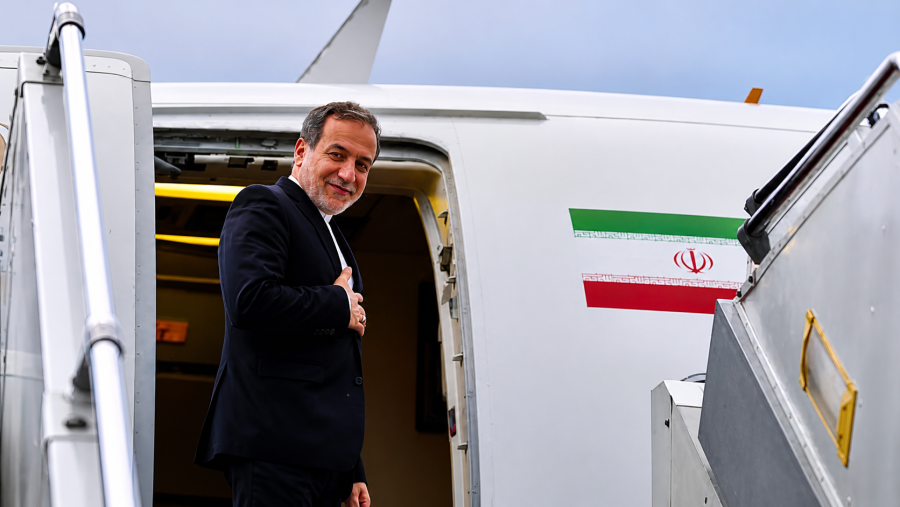
London - Foreign minister Abbas Araqchi is set to travel to Beijing on Tuesday for high-level talks with his Chinese counterpart as Tehran intensifies a diplomatic push to shore up support among key partners amid a deepening confrontation with Washington.
The visit, confirmed by Iran's foreign ministry, will focus on bilateral ties as well as regional and international developments and comes at a moment of acute tension in the Gulf and a fragile diplomatic impasse over the ongoing war involving Iran, the United States and Israel.
Araqchi's trip to China follows a broader regional tour that has already taken him to Moscow, Islamabad and Muscat. In Russia, he held talks with President Vladimir Putin and met his counterpart, underscoring Tehran's effort to coordinate positions with major powers seen as counterweights to the US.
The Beijing visit is likely to reinforce China's emerging role as a diplomatic interlocutor in the crisis. Beijing has sought to position itself as a stabilising force, drawing on its longstanding policy of "noninterference" and its working relations with all sides in the conflict.
The diplomatic activity comes against the backdrop of a widening conflict that erupted on February 28, when the United States and Israel launched strikes on Iran, assassinating Supreme Leader Sayyed Ali Khamenei, as well as top military commanders, marking a dramatic escalation that has since drawn in multiple regional actors.
Iran responded with retaliatory strikes and moved to assert control over the Strait of Hormuz, a vital artery for global energy shipments. Tehran has since restricted passage for vessels linked to the US and its allies, while Washington has imposed what Iran describes as an illegal blockade on its ports.
A temporary ceasefire brokered by Pakistan took effect on April 8, forty days into the conflict, but subsequent negotiations in Islamabad failed to yield a breakthrough. Officials on both sides have traded blame, with Tehran accusing Washington of adopting maximalist demands and the US continuing to issue military threats.
Iran has submitted proposals aimed at permanently ending the war, but these have reportedly elicited a contradictory response from the White House, leaving talks deadlocked and raising fears of renewed escalation.
Against this volatile backdrop, Araqchi's meetings in Beijing are expected to test how far China is willing to go in leveraging its diplomatic capital to ease tensions - or whether its role will remain confined to that of a cautious mediator balancing ties across an increasingly polarised conflict.
We've 'not even started yet'
Separately, Iran's parliament speaker Mohammad Baqer Qalibaf said the situation in the Strait of Hormuz was becoming increasingly difficult for Washington.
In a post on X on Tuesday, Qalibaf said a "new equation" was taking shape in the strategic waterway.
"The security of shipping and energy transit has been endangered by the United States and its allies through the violation of the ceasefire and the imposition of a blockade," he wrote. "Of course, their evil will be diminished."
He added that Iran was aware of mounting pressure on the United States.
"We know very well that the continuation of the current situation is unbearable for the United States, while we haven't even started yet," he said.
Conversations
The opinions expressed in reader contributions are those of the respective author only, and do not reflect the opinions/views of Trans Asia News.