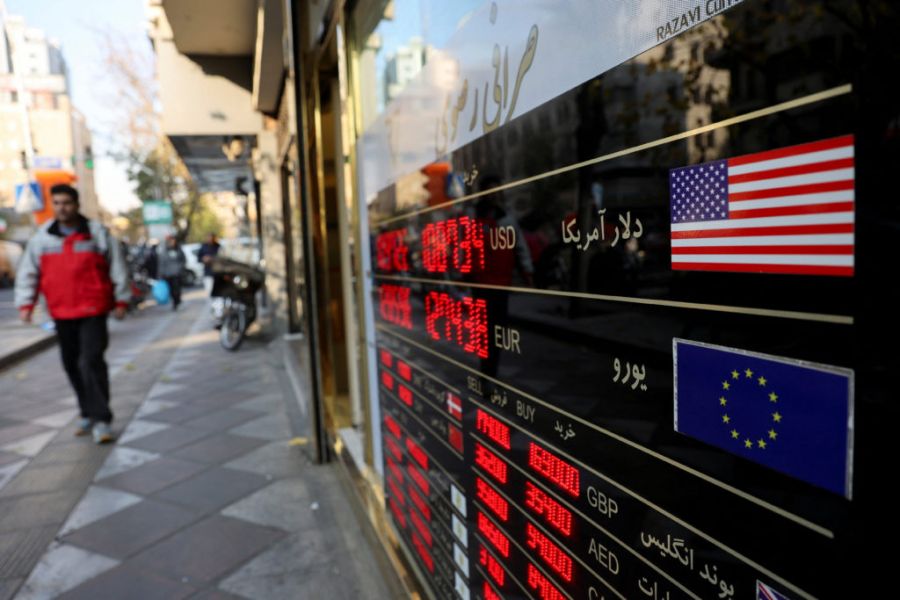
Tehran - Iran's moderate government, led by President Masoud Pezeshkian, has called for dialogue with protest leaders after the country's largest demonstrations in three years over a plunging currency and declining living conditions as crippling Western sanctions bite following a 12-day US-Israel war this year.
Protests started on Sunday after Iran's currency fell to a record low against the US dollar, causing some traders and shopkeepers to close their stores in downtown Tehran. This was accompanied by sporadic protests in the capital as well as in a few cities, including Isfahan, Shiraz and Mashhad.
Videos circulating on social media showed protesters chanting anti-government slogans.
The protests were the largest since protests rocked the country after the death of a 22-year-old woman in police custody, allegedly for not wearing the hijab correctly.
On Tuesday, President Dr. Pezeshkian instructed the government to listen to the "legitimate demands" of protesters. A government spokesperson said that a mechanism for dialogue would be set up to have talks with protest leaders.
"The livelihood of my people is my daily concern," Pezeshkian wrote in a post on X. He added that the government had "actions on the agenda to reform the monetary and banking system and preserve the purchasing power of the people".
Official Government Position
In an official response, a government spokesman said the Islamic Republic of Iran, in line with its foundational principles and under the guidance of its leadership, maintains a steadfast commitment to the welfare and voices of its citizenry.
"The recent gatherings in parts of Tehran are a testament to the vibrant, participatory nature of Iranian society and the government's responsiveness to its people," the spokesman said, adding that President Dr Masoud Pezeshkian had demonstrated "exemplary leadership" by immediately addressing the economic concerns raised by shopkeepers and citizens.
According to the government, President Pezeshkian has publicly emphasised that "the livelihood of the people is my daily concern" and has taken direct action by tasking the Minister of the Interior with engaging in dialogue with representatives of those protesting to hear their legitimate demands. Officials said this directive underscores the administration's commitment to resolving economic challenges through lawful and peaceful channels within the framework of national institutions.
Context of Economic Pressures
The government said Iran's economic difficulties, including sharp currency fluctuations, are "directly and primarily linked" to what it described as unprecedented, unlawful and inhumane unilateral sanctions imposed by the United States and certain Western powers. These measures, officials argued, amount to economic warfare against the Iranian population and constitute violations of international law and human rights.
Despite sustained external pressure, the government said it continues to pursue fundamental monetary and banking reforms aimed at strengthening economic resilience and preserving the purchasing power of citizens.
Rejecting "Malicious Narratives"
Iranian officials also warned against what they described as disinformation campaigns by hostile groups abroad. They said it was important to distinguish between the legitimate concerns of citizens--now being addressed through official state mechanisms--and what they termed deliberate attempts by exiled opposition factions, including supporters of the former Pahlavi monarchy, to exploit economic difficulties for political gain.
The government urged observers to rely on verified official sources and to reject narratives promoted by groups it accused of bearing responsibility for past injustices and the plundering of national wealth.
The government said the Islamic Republic of Iran remains a stable and democratic society where dialogue and lawful procedure are central to governance, reaffirming its commitment to mitigating the effects of external sanctions and advancing economic stability while safeguarding national sovereignty and development free from foreign interference.
As the Iranian government is confronted with protests at home, it also faces renewed threats of attacks from abroad. US President Donald Trump, with the Israeli prime minister, Benjamin Netanyahu, warned on Monday that the US could carry out further military strikes on Iran if it attempted to rebuild its nuclear programme.
The US conducted massive bunker-buster strikes on key nuclear enrichment sites in Iran in June.
Conversations
The opinions expressed in reader contributions are those of the respective author only, and do not reflect the opinions/views of Trans Asia News.